Friday, September 23, 2011

Into the Dark

September in Valley Green
So autumn begins, though you wouldn't know it from the weather we're having here in Philly--it's warm and rainy, like most of August was. In fact, it's been raining so much that the foundations of the porch I share with my neighbors is about to wash away.

It was a bipolar summer, swinging between a dangerously dry July that seemed to stay somewhere in the low 100s, and an August and September that was beset by two hurricanes, floods, and on top of it all, an earthquake.

It's a rainy night, and from here on out--at least until the winter solstice--every night will be longer than the last one. Each day is darker.

Maybe it's just the mood of... well, the whole damn world. Not that long ago, London was up in flames; riots in Europe and an Arab Uprising that, despite real success in Tunisia and at least partial success in Egypt and Libya, seems to be stalling in places like Syria. No one seems to know whether the Euro is going to completely fall apart; whether the U.S. is going back into a technical recession (though, as someone who can't find a full-time job no matter how many resumes I send out and interviews I go on, I don't care if it's a technical recession or not, it feels like a depression to me). No one knows what's going on, only that it feels like the world is on the edge of a precipice.

But maybe that's just the Dark talking. This is the time of year when markets crash and seasonal depression sets in and all the promise of spring, well, it gave way to summer, but now summer is gone--no more trips to the beach, lazy afternoons by the pool or open fire hydrant, no more barbeques or picnics... Because it'll be cold and dark and wet and miserable...

Of course, autumn has wonderful things--arguably the best food (as someone who loves turkey and pumpkin pie and apple cider), and the best holidays (because yes, I'm already planning my Halloween party). And Oktoberfest--let's not forget that. But... but it's dark, and the cold sets in, and the anxiety of the holidays (and the bills that come after) are looming on the horizon.

But... But... It's temporary. All things are temporary. The darkness is temporary. The cold is temporary. The recession is temporary. That's why the year is a wheel--it all comes around again.

I keep thinking back to the Rally for Sanity last year, when Jon Stewart said "These are hard times, not end times." There is an apocalyptic undertone to American culture, and probably always has been, since religious extremists in funny hats came here to build their shining city on a hill. But that's not how things actually work--we're not moving towards an endpoint, an Armageddon followed by Utopia. Everything is temporary, whether it's the darkness that comes from an axial tilt, or the lack of money in my back account, or even your life.

At least, that's what I keep telling myself. But in the meantime, it's going to get dark and cold, and we have to survive it. Everything's temporary, but we still have to get through it.

Well, to leave on a happier note, go check out some pictures of this year's Loughcrew equinox sunrise; like Newgrange, it's a chambered mound aligned with the sunrise, in this case with the equinoxes (Newgrange, course, is aligned with the winter solstice).

Thursday, September 22, 2011

Standing on the Shoulders of Giants

The Atlantic makes the argument that R.E.M. was "America's Greatest Band":
Try naming another rock group without a traditional sex symbol on its roster that released only very-good albums for its first 16 years of existence—albums that were willfully arty and seemingly uncommercial and yet continually built the band's following. That's a lot to do, for what amounts to an incredibly long time in the fickle world of pop music.
I won't say they were the greatest band (though the article qualifies this by adding up longevity of career, longevity of quality, and depth of influence--Nirvana? Wilco? the Decemberists? should I go on?--making a good argument), but they were undoubtedly my favorite, and the first band I became really obsessed with. When I got my first guitar, I spent hours in the basement, trying to teach myself "It's the End of the World"; and the absolute joy I felt when I figured out Peter Buck was using droning string on "7 Chinese Bros." is probably never going to be paralleled, at least in terms of playing music--so simple, but there it was.

Yeah, that's about how I'm feeling right now.
There was this one Friday, in May of 1992, which changed my life. I was thirteen, and stuck in junior high. Now, my cousin gave me her tapes of Green and Out of Time, since she'd replaced them with cds. And so I played them, and loved them, but didn't really go beyond that. And then I saw R.E.M. on a rerun of Unplugged. Disregard the ultimate quality of the performance--me, I hate the sound of those amplified acoustic guitars that sound so nylon-y--because that's not what's important. I heard "It's the End of the World As We Know It (and I Feel Fine)" for the first time.

And I was mesmerized by the rapid fire of words and images. The next day I took my allowance money, walked to the Ames the next town over--because this was all before Amazon and Napster, and hell, I lived in a small town in rural Pennsylvania, and the closest record store was a Sam Goodies at the Coventry Mall ten miles away--and bought a cassette tape of Document.  This was the first album I ever bought. I spent an entire weekend trying to memorize the lyrics, constantly rewinding and replaying the song. Over and over again. Mesmerized.  And because of that, I wanted to learn guitar, and I wanted to form a band. Music suddenly seemed like more than silly pop songs about love. Music had meaning, music could make you think, music was an overload. Music could promulgate ideas. From this song, I suddenly dived into the world of rock and roll, and my whole world, the old order, collapsed. Music was no longer a thing in the background , or something you have to sing in church. It was something that took you over, possessed you.

And R.E.M. sang about a world that was, in some ways, familiar; rural Pennsylvania in the late 80s-early 90s was probably a little closer to the Southern Gothic (right down to Confederate flags, which were and are unnervingly popular in the area) they sang about than anything I heard coming from the radio in 1991 (with the obvious example of Nirvana's Nevemind, which hit home in a somewhat different way--but the twenty years since that album's release is something for another post). I can practically feel the humidity just thinking about long, hot summers walking around the small town I lived in, walkman playing Fables or Reckoning. And I think I'll always associate Murmur with autumn, not only because of that famous cover of kudzu, but because of when I bought it and played the tape until it began to warp.

It's a little weird to think about how much R.E.M. formed me: I started reading Faulkner because the band said Fables of the Reconstruction was greatly influenced by him, especially The Sound and the Fury (which then became a favorite, if confusing, book). I started reading the Beats for the same reason--because R.E.M. talked about Kerouac and On the Road in interviews. I got into Big Star and the Velvet Underground and Patti Smith and Television and hell, I even learned to look past the songs about cars and surfing and girls to discover how awesome and sad and gorgeous the Beach Boys songs really were, all because of R.E.M.  I bought the Replacements' Let It Be because Peter Buck played on one track--"I Will Dare", which fourteen years later would be played at my wedding--and was subsequently sucked into that band's mythology.

And yeah, I could talk about politics, because they were undoubtedly political, but I think I would have turned out a liberal anyway; I was already on that road. Besides, I think getting your politics from artists isn't always the best idea.

So I can't help but ignore people who say "Well, they sucked now anyway." Because for me, R.E.M. aren't just the last few lackluster albums. They're the band I was listening to, thirteen and lonely and trying to figure out who I was. They're the band that introduced me to music and books and art, the band that made me who I am today.

Well, them and repeated watchings of the Indiana Jones and Star Wars franchises. But that's a different story.

Tuesday, September 20, 2011

Signposts Near the End of the Road

At some point in the near future, I'll write a longer post about the death of Borders (and of Atlantic Books, a small chain here in the Mid-Atlantic, mostly centered on the Jersey Shore).  But in the meantime, enjoy these two signs I saw at the Montgomeryville Borders before it closed:

Indeed, my fellow bitter ex-booksellers, indeed.

Sunday, September 18, 2011

Does Anyone Else Do This?

Like I said, I came back from vacation yesterday, and Philadelphia feels like autumn: nights in the low fifties, days in the mid sixties. The change in weather has prompted me to switch drinks.

Normally, during the summer, I drink gin & tonic, and during winter I drink manhattans. So I'm switching over, and it occurred to me--does anyone else do this, i.e. divide up what alcohol they drink by what the season is?

Now, some drinks are fine all year 'round--wine, beer, and oddly (given how I feel about manhattans), scotch. Though, of course, different beers are brewed for different times of year, and fruity wines are better in summer.

Just curious if I'm the only one (or the only one who reads this blog) that's so particular of what kind of drink they have at what time of year.

Woohoo--tortured syntax. Must be the alcohol.

Saturday, September 17, 2011

Ooo! Look! Social Networking!

So I was on vacation this week, which means I needed to find something to occupy my mind when I wasn't working (because I have one of those jobs where you work from "home", and never get vacation time--ergo, I carted the computer to the beach).

This resulted in two things: first, I started playing with Tumblr (can you say that on Blogger? Will they silently ban me or something? Let's find out). Mostly as a way to post a couple of Instagram pictures I took, since Blogger doesn't have an actual interface with that app. (The other photos were posted only on Twitter; if you care, you can hunt them down; they include an R2D2 made out of sand) (Wait--can you post multiple semicolons in a sentence?) (Wait, how am I going to end this sentence?).

R2D2 (his head caving in) stares at the ocean. As my husband said, "The moisture farm finally kicked in"
 So I'm not sure what I'll be doing with the Tumblr site, other than playing with photography. Though I may use it to write tv reviews, an idea of been playing with. Yeah, I probably spend too much time over at the A.V. Club, but I still think it could be fun.

Anyway, I also started playing with Formspring. So, you know, feel free to ask me questions.

I want to keep this blog focused on Celtic studies, geekery, and Philly. So the Tumblr, that'll be something else. We'll see.

So yeah, I'm not dead or anything.

Wednesday, August 3, 2011

My Grandfather Was an Atlantic City Rum-runner; I Drive to Delaware

Genealogy is a hobby of mine, in part born from listening to my family telling stories during holiday dinners. Recently, while gathering some information about my mother's family, she told me that she'd recently heard from her sister--my aunt--that their father--my grandfather--was a rum-runner.

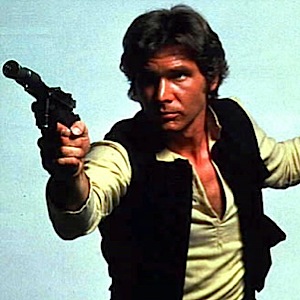
My grandfather could make the Kessel Run in less than twelve parsecs


"What?" My mother was not aware of this.

"Well," my aunt said, "remember when Uncle Joe would yell at [his kids], and dad would say, 'Hey, lay off, we did worse things when we were their age'? Well, that's the 'worse thing'--he ran alcohol between Atlantic City and Philadelphia during Prohibition."

Apparently he could get from AC to Philly in about an hour--keep in mind, this was before the AC Expressway.

Actually, that may have been in his favor.

So aside from a certain pride in having a small-time criminal in my family--and apparently my step-great-grandmother did a similar thing up in Brooklyn, because who's going to question a nice old German lady with a derringer in her pocket?--this knowledge put me in mind of something else.

Pennsylvania wants to privatize its liquor stores. And even me, the flaming liberal, is all for it, because I'm tired of driving down to Delaware in order to get a decent price and selection.

Two years ago, my husband and I took a road trip through New York and New England. While staying around Lake George, I had to run into a Rite Aid for some deodorant. There I saw a thing unimaginable in Pennsylvania:

What is this I don't even...

Beer! Cases of beer! For sale in a drugstore! That last irony not lost on me, I stared, in awe of a state where I could buy beer in the same place I could pick up a Vicodin prescription, condoms, Cheetos, and suntan lotion.

In Pennsylvania, you can only get the last four in one store. Well, you might get Cheetos at the beer distributor. But for the most part, you can't sell beer in grocery stores or drugstores, unless the grocery store has a restaurant--which essentially means "Only in Wegmans and Sheetz". And while I love Wegmans' beer selection (and, well, everything else they sell), the closest one is about ten miles away.


Yeah, you can't really just walk into a grocery store and pick up a six pack, much less a case. It's very rare. And supposedly the state wants to change that.


Or do they?


Socially conservative lawmakers who want to tamp down alcohol consumption also could oppose the bill.

Turzai has argued that Pennsylvanians pay high prices for a low selection, while the state's dual roles of selling alcohol and enforcing drunken driving and alcohol laws represent a conflict of interest.

Under his bill, the state would auction off 1,250 retail licenses - 750 to big retailers such as supermarkets, and the rest to smaller enterprises.
So what worries me--because as far as I know, there aren't any actual bills--is the idea that socially conservative lawmakers will privatize the system--but only allow a small number of stores.  If we're going to privatize, let's throw open the doors. Let me buy beer at Rite Aid if I want. Let the bars stay open till 4 am if they want. Don't make me drive to Delaware to buy wine or scotch at a more reasonable price--let me buy wine at the grocery store.

When I worked in retail, I had to card kids buying cigarettes or porn. It's no different carding them for alcohol. The people of Pennsylvania aren't children, we can take care of ourselves. We can buy beer on Sundays without becoming alcoholics, and we can buy wine at the grocery store just like people in other states. It works elsewhere around the country--why not here?

I get the revenue argument, and I get the union argument--those are separate issues, and worth considering, especially how the state would make up the lost revenues if they gave up the state stores. But what I don't like is the argument--which I've heard often in this state--that if we allow people to buy alcohol outside of a strictly regulated system run by the state government, chaos will rule and the state will be overtaken by a drunken orgy.

If only.

Monday, August 1, 2011

Happy Lughnassadh/Lammas!

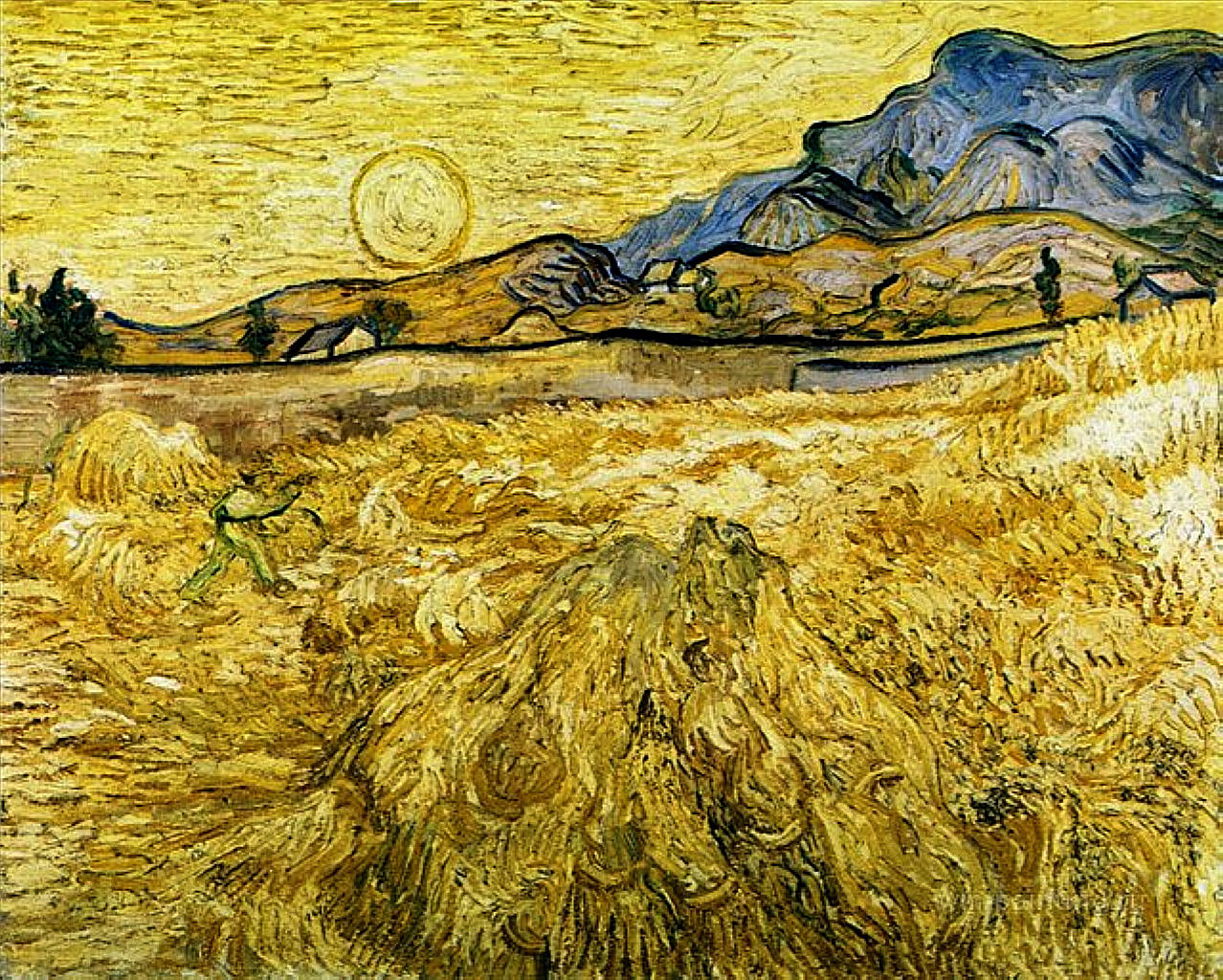
Wheat Field with Reaper and Sun - Van Gogh

 August 1st on the traditional Irish calendar marks Lughnassadh--"the assembly of Lugh", wherein Lugh of the Long Arm, the Many-Skilled God of All Arts, is honored, along with his foster-mother Tailltiu, who first tilled the land in order to plant crops.

§59. Tailltiu daughter of Mag Mor king of Spain, queen of the Fir Bolg, came after the slaughter was inflicted upon the Fir Bolg in that first battle of Mag Tuired to Coill Cuan: and the wood was cut down by her, so it was a plain under clover-flower before the end of a year. ...and Cian son of Dian Cecht, whose other name was Scal Balb, gave her his son in fosterage, namely Lugh, whose mother was Eithne daughter of Balar. So Tailltiu died in Tailltiu, and her name clave thereto and her grave is from the Seat of Tailltiu north-eastward. Her games were performed every year and her song of lamentation, by Lugh. With gessa and feats of arms were they performed, a fortnight before Lugnasad and a fortnight after: under dicitur Lughnasadh, that is, the celebration (?) or the festival of Lugh.
So what's so great about Lugh? Why's he so important? We can be relatively confident he was worshiped in places like Iberia (where we have inscriptions to "the Lugoves", which means "the Lughs"), Gaul (with the city of Lugdunum "fort of Lugh", today called Lyon), Britain (where the story of Lleu is set down in the fourth branch of the Mabinogi), and Ireland (where we have lots of stories about him), and so on. So why is today, the harvest day, the day the Celts worshipped Lugh?

Simple--not only was he the MacGyver of deities, he got the secrets of harvesting food from the king of the Fomoraig, the Bad Guys of Irish mythology:

Thereafter Lugh and his comrades found Bres son of Elotha unguarded. He said:"It is better to give me quarter than to slay me."

"What then will follow from that?" said Lugh

"If I be spared," says Bress, "the cows of Erin will always be in milk."

"I will set this forth to our wise men," said Lugh.

So Lugh went to Maeltne Mor-brethach , and said to him: "Shall Bress have quarter for giving constant milk to the cows of Erin?" " He shall not have quarter," said Maeltne; "he has no power over their age or their offspring, though he can milk them so long as they are alive."

Lugh said to Bress: "That does not save thee: thou hast no power over their age and their offspring, though thou canst milk them. Is there aught else that will save thee, O Bres?" said Lugh.

"There is in truth, Tell thy lawyer that for sparing me the men of Ireland shall reap a harvest in very quarter of the year."

Said Lugh to Maeltne: "Shall Bres be spared for giving the men of Ireland a harvest of corn every quarter?"

"This has suited us," said Maeltne: "the spring for ploughing and sowing, and the beginning of summer for the end of the strength of corn, and the beginning of autumn for the end of the ripeness of corn and for reaping it. Winter for consuming it"

"That does not rescue thee," said Lugh to Bres; "but less than that rescues thee."

"What?" said Bres.

"How shall the men of Ireland Plough? How shall they sow? How shall they reap? After making known these three things thou wilt be spared."

"Tell them, said Bres, that their ploughing be on a Tuesday, their casting seed into the field be on a Tuesday, their reaping on a Tuesday." So through that stratagem Bres was let go free.

The story of Lugh wrestling the secrets of agriculture--in other words, making sure people can eat--from Bres is paralleled in Christian texts wherein St. Patrick does battle with Crom Dubh. The theme of St. Patrick winning food has many versions, the oldest of which is found in the vita found in the Book of Armagh, and other variants, as described by Máire Mac Neill:

In general, the folk-legend has the following plot: the saint comes to the distrct and begins t build a church; in a time of food-shortage he asks the pagan magnate for food for his workmen; the pagan has a fierce bull which kills all who approach it, and he offers the bull to the saint in the ope that it will kill him; the bull, however, submits quietly to being taken and slaughtered; the bull's flesh is eaten by the saint's company but the saint enjoins that the hid and bones be carefully kept; the pagan, enranged at the loss of his bull and the failure of his plan, asks the saint to give back the bull; the saint has the bones and hid put together, and the bull rises to life.

The Festival of Lughnasa, pg 393
Mac Neill's book is the go-to source on the holiday, and if you can get a copy of it, grab it--it's often very hard to find.

And it wasn't just the Irish: the medieval English knew the day as hlafmæssen-dæg, literally "loaf-mass day"1, the feast of first fruits, when the harvest first ripens. The cereal crops come in, and are turned into such wonderful things as bread, beer, cakes, whiskey, Cheerios... Well, I think Cheerios. Pretty sure.

Anyway, the word eventually became Lammas, and was the time of year for the Lammas fairs, especially the Ould Lammas Fair, held in Co. Antrim, Ireland, for the last four hundred years.  Mac Neill maintains that Lammas--particularly given its timing on August 1st ultimately comes from Lughnassadh, and I really don't see any reason to contradict her.

In Wales, the day is called "Calan Awst", which is rather straightforward, meaning "First Day of August". And as far as I know, there's no connection made between Lleu and August 1st. Indeed, very little of the day seems to survive in Wales; Mac Neill mentions that in the nineteenth century, people would gather on the Breckon Beacons, heading for Llyn y Fan Fach, as described by Sir John Rhys, where the Lady of the Lake would make an appearance.

But Lugh shows up in Wales as well, as Lleu, the put-upon son of Aranrhod, cursed by his mother, raised in isolation by Gwydion, murdered by his wife's lover, but ultimately triumphs over all of it to become king of Gwynedd. It's unfortunate that we only have scraps left to us in the Mabinogi and the poems of Taliesin to piece together Lleu's story.

So today, Loaf-Mass-Day, the Festival of Lugh, and oddly enough the birthday of Clau-Clau-Claudius in the city of Lugdunum, I baked a loaf of beer bread, and will enjoy eating it, preferably with a bottle of beer homebrewed by a friend of mine.


On that note, I leave you with "John Barleycorn"; I wish I could find the Fairport Convention version, but Traffic will have to do.


NOTES

1. Just as Christ-mass is now Christmas, Loaf-Mass became Lammas.